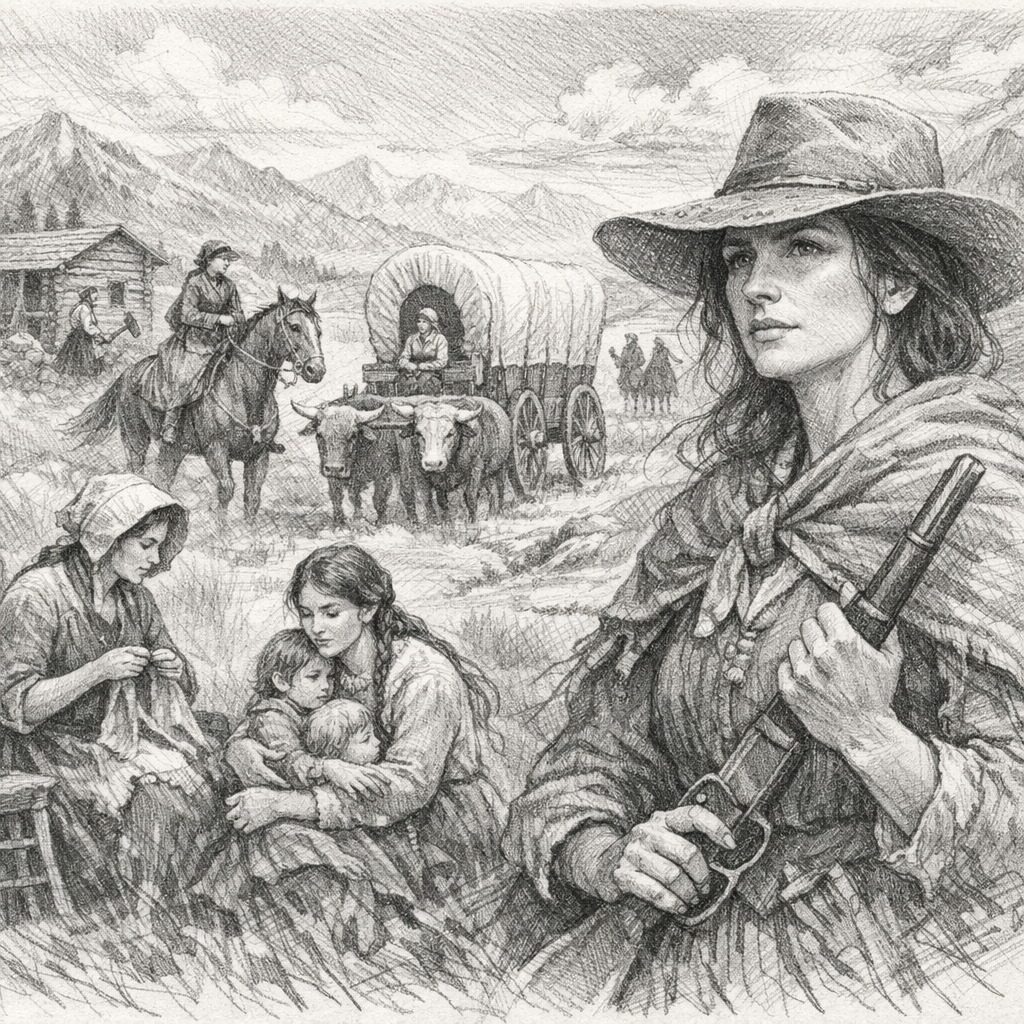
Daily life on an 1800s homestead was a test of endurance, ingenuity, and faith. It was a world built from scratch—where every sunrise brought work and every sunset brought exhaustion, yet also quiet satisfaction. The frontier was not a romantic wilderness of endless opportunity; it was a place of isolation, danger, and relentless labor. Still, for those who dared to carve a life from the land, it offered freedom and purpose unmatched by the comforts of the cities they left behind.
The Morning Begins With Work
On a typical homestead in the mid‑1800s, the day began before dawn. The rooster’s crow was the alarm clock, and the first task was to light the fire in the hearth. Without electricity or running water, everything depended on manual effort. Water had to be drawn from a well or nearby stream, often in freezing temperatures. Breakfast was simple—cornmeal mush, biscuits, or salt pork—and eaten quickly before chores began.
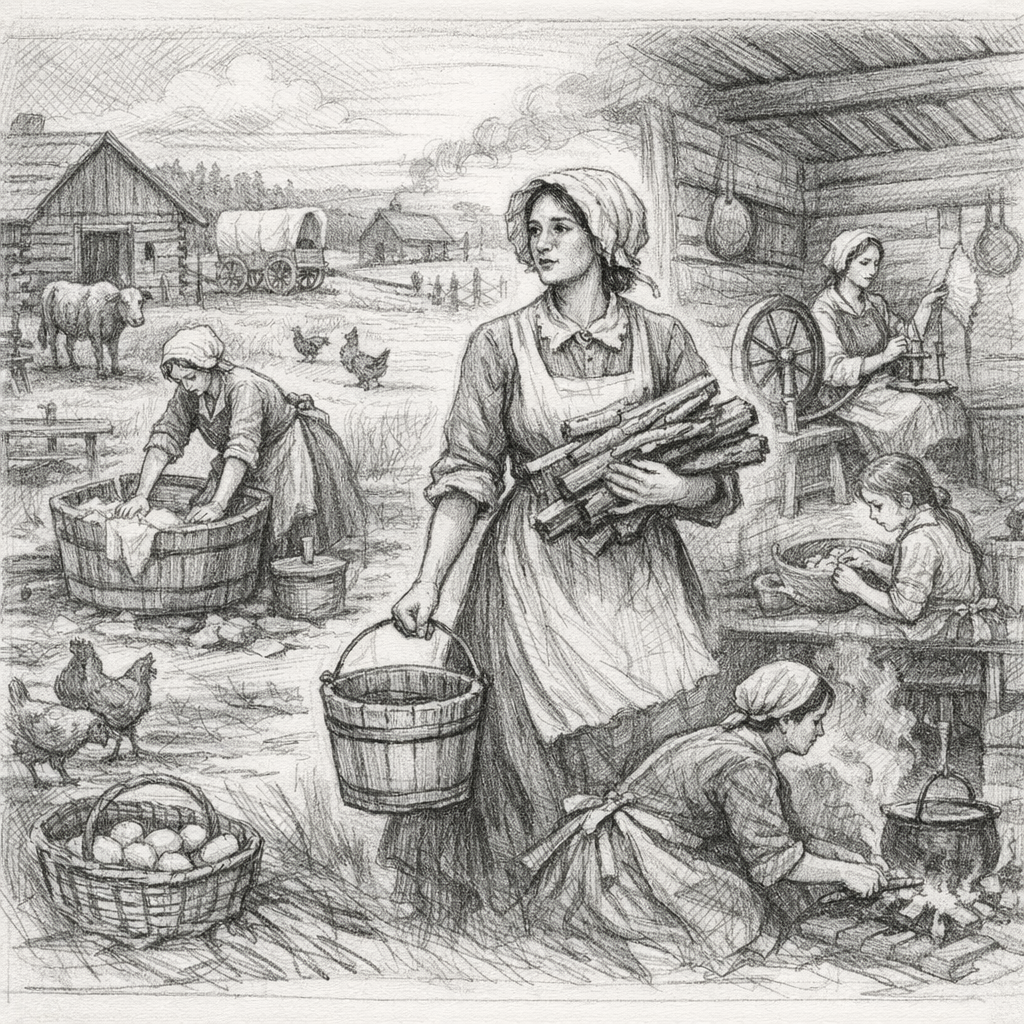
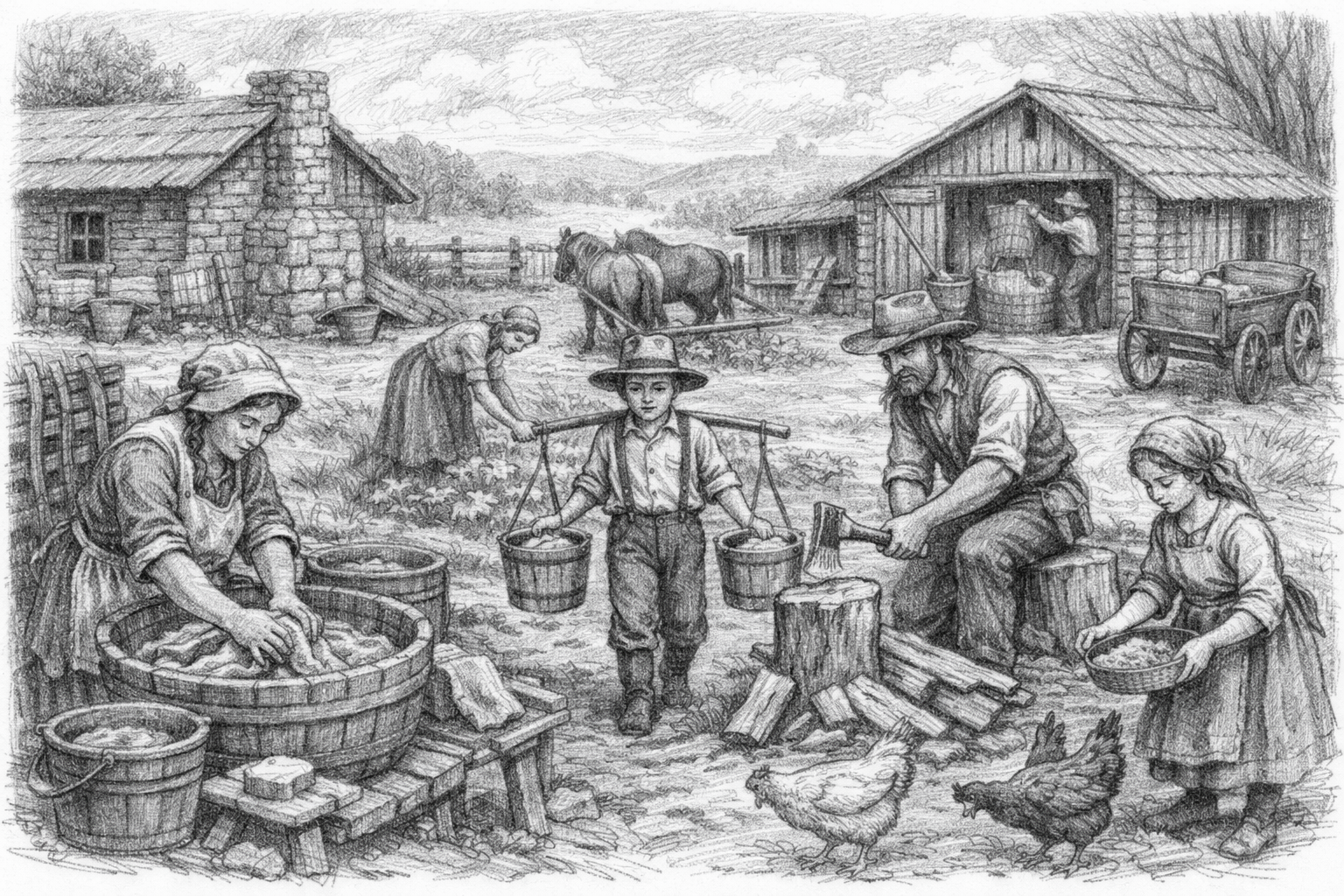
Men usually started with livestock: feeding horses, milking cows, and checking fences. Women tended to the hearth, preparing meals and washing clothes by hand. Children, even as young as five, were expected to help—fetching water, gathering eggs, or keeping watch over younger siblings. Life revolved around survival, and every member of the family had a role to play.
Building a Home From the Earth
Most homesteaders built their homes from whatever materials were available. In the Great Plains, where trees were scarce, settlers constructed sod houses—thick blocks of prairie grass stacked like bricks. These “soddies” were cool in summer and warm in winter but leaked during heavy rain and were home to insects and mice. In forested regions, log cabins were more common, built with hand‑hewn timbers and mud chinking to seal the gaps.
Inside, furnishings were sparse. A table, a few chairs, and straw‑filled mattresses were luxuries. The fireplace was the center of life—providing heat, light, and a place to cook. Windows were rare, and glass was expensive, so greased paper or cloth often served as makeshift panes. Despite the rough conditions, these homes were symbols of independence. Every nail hammered and every wall raised was a declaration of self‑reliance.
Farming and Food: The Battle for Survival
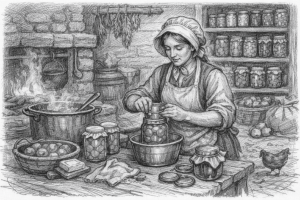
Farming was the backbone of frontier life, but it was far from easy. The soil was often hard and unbroken, requiring oxen or horses to pull heavy plows. Rainfall was unpredictable, and droughts could destroy crops overnight. Homesteaders grew corn, wheat, beans, and potatoes—staples that could survive harsh conditions. Women maintained kitchen gardens filled with herbs and vegetables, ensuring variety in the family’s diet.
Preserving food was essential. Without refrigeration, settlers relied on drying, smoking, and salting. Meat was hung in smokehouses, fruits were dried in the sun, and vegetables were stored in root cellars. Canning became more common later in the century, but early pioneers depended on ingenuity to keep food edible through long winters. Hunger was a constant threat, and a failed harvest could mean starvation.
Women’s Work: The Heart of the Homestead
Women were the backbone of frontier life. They cooked, cleaned, sewed, and raised children, often while helping in the fields. Laundry was one of the hardest chores—hauling water, heating it over a fire, scrubbing clothes on a washboard, and hanging them to dry in the wind. Soap was made from lye and animal fat, and every bar represented hours of labor.
Women also served as healers and midwives. With no doctors nearby, they relied on herbal remedies and experience to treat illness and injury. Childbirth was dangerous, and many women died young from infection or exhaustion. Yet their resilience shaped the frontier. They created homes from wilderness, teaching children to read and pray even when schools and churches were miles away.
Children: Growing Up Fast
Childhood on the frontier was short. As soon as children could walk, they worked. Boys learned to chop wood, hunt, and plow fields. Girls learned to cook, sew, and care for siblings. Education was limited—many attended one‑room schoolhouses only in winter when farm work slowed. Lessons were basic: reading, writing, arithmetic, and moral instruction.
Play was rare but precious. Children made toys from corn husks or scraps of wood, played tag in the fields, and swam in nearby creeks. Despite hardship, they grew up with a deep sense of responsibility and connection to the land. Their labor kept the homestead alive, and their endurance carried frontier families into the next generation.
Community and Isolation
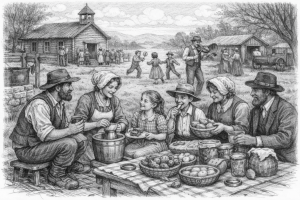
Homesteads were often miles apart, and isolation was one of the hardest parts of frontier life. Neighbors might be a day’s ride away, yet community bonds were strong. Families helped one another build barns, harvest crops, and survive harsh winters. Social gatherings—barn raisings, quilting bees, and church picnics—were rare but cherished.
Churches and schools were among the first institutions built in new settlements. Faith provided comfort and moral structure, while education offered hope for a better future. Mail delivery was slow, and news from the outside world could take months to arrive. Still, settlers found ways to stay connected—through letters, travelers, and the occasional newspaper carried by wagon.
Hardship and Resilience
Life on an 1800s homestead was a constant struggle against nature. Winters were brutal, summers scorching, and storms could destroy months of labor in minutes. Disease was rampant—typhoid, cholera, and smallpox claimed countless lives. Medical care was primitive, and even minor injuries could become fatal.
Yet amid hardship, there was pride. Every acre cleared, every crop harvested, and every child raised was a triumph. Homesteaders measured success not in wealth but in survival. They built communities, tamed wilderness, and laid the foundation for modern America. Their resilience became part of the national identity—the belief that hard work and perseverance could conquer any obstacle.
Evenings on the Frontier
When the day’s work ended, families gathered around the fire. Supper was simple—beans, bread, and whatever meat was available. Afterward, there might be storytelling, Bible reading, or music played on a fiddle. Light came from candles or oil lamps, and the flicker of flame cast long shadows across rough‑hewn walls.
Evenings were moments of peace. Outside, wolves howled and wind swept across the plains, but inside, families found warmth and companionship. These quiet hours were the heart of frontier life—a reminder that even in hardship, beauty could be found in simplicity.
The Legacy of Frontier Living
By the late 1800s, railroads and towns began to transform the frontier. Homesteads became farms, and wilderness gave way to civilization. Yet the spirit of those early settlers endured. Their values—self‑reliance, hard work, and faith—shaped the American character.
Daily life on an 1800s homestead was not easy, but it was meaningful. It demanded courage, sacrifice, and endurance. Every sunrise brought new challenges, and every sunset marked another day survived. In the end, frontier living was not just about taming the land—it was about discovering the strength within oneself to build a life from nothing.