Pioneer cooking was born from scarcity, ingenuity, and the relentless demands of survival. Families traveling west or carving out homesteads on the frontier had no refrigeration, limited fuel, and only the ingredients they could grow, hunt, or carry. Their recipes were simple, hearty, and designed to stretch ingredients as far as possible. Yet within those constraints, pioneers created dishes that were deeply flavorful, comforting, and surprisingly adaptable. Many of these recipes have faded from modern kitchens, overshadowed by convenience foods and global ingredients. But they deserve a revival—not just for nostalgia, but because they offer lessons in resilience, resourcefulness, and the beauty of simple cooking. These forgotten pioneer recipes remind us that good food doesn’t require luxury; it requires creativity, patience, and a willingness to work with what the land provides.
1. Salt‑Rising Bread: The Frontier’s Wild Fermentation
Long before packaged yeast existed, pioneers relied on a fermentation method that feels almost magical today. Salt‑rising bread begins with a warm mixture of cornmeal or potatoes that captures wild bacteria from the environment. The starter smells strong—almost cheesy—but the resulting bread is tender, dense, and deeply flavorful. It was a staple on the trail because it required no yeast and could be made anywhere with a warm spot near a fire. Reviving this recipe reconnects us with a time when breadmaking was an act of patience and trust in nature’s invisible helpers.
2. Johnnycake: The Cornbread That Traveled West
Johnnycake was the reliable companion of pioneers crossing the plains. Made from cornmeal, buttermilk, eggs, and a touch of molasses, it baked beautifully in cast‑iron pans or Dutch ovens. Its dense, slightly sweet crumb made it perfect for breakfast, dinner, or a quick trail snack. Corn was one of the few ingredients that stored well for months, so this recipe followed settlers from the East Coast to the Rocky Mountains. Bringing back johnnycake means embracing a humble, nourishing bread that pairs with everything from stews to honey.
3. Potato Cakes: A Staple Born of Necessity
Potatoes were a lifeline for pioneer families. They stored well, grew in poor soil, and could be transformed into countless dishes. Potato cakes—grated potatoes mixed with eggs, flour, and milk—were fried in cast iron until crisp and golden. They were filling, inexpensive, and endlessly adaptable. Families ate them for breakfast with syrup, for supper with salt pork, or as a side dish to stretch a meal. Today, they remain a delicious reminder that simple ingredients can create extraordinary comfort food.
4. 101-Year Old Pastry
The “101-year-old pastry” refers to a classic, “no-fail” pie crust recipe passed down through generations, often featuring lard or shortening, flour, salt, an egg, and vinegar to create a flaky, tender texture. Popular in online, vintage-style baking, it is valued for producing a durable dough suitable for many pies.
5. Hardtack: The Survival Bread That Endured Everything
Hardtack was not glamorous, but it was essential. This simple mixture of flour and water baked into a rock‑hard biscuit that could last for years. Pioneers softened it by dipping it into coffee, broth, or stew. While it may not be a daily staple today, hardtack deserves a comeback as an educational recipe—one that teaches us about food preservation, endurance, and the realities of frontier travel. It also makes a surprisingly good cracker when seasoned and baked fresh.
6. Indian Pudding: A Slow‑Cooked Colonial Dessert
Indian pudding, made from cornmeal, molasses, milk, and spices, was a beloved comfort food in early America. Slow‑baked for hours, it transforms into a warm, custard‑like dessert with deep caramel notes. Pioneers cherished it because it used inexpensive, shelf‑stable ingredients and required no special equipment. In an age of instant desserts, Indian pudding invites us to slow down and savor the alchemy of simple ingredients cooked with care.
7. Perpetual Soup: The Broth That Never Ended
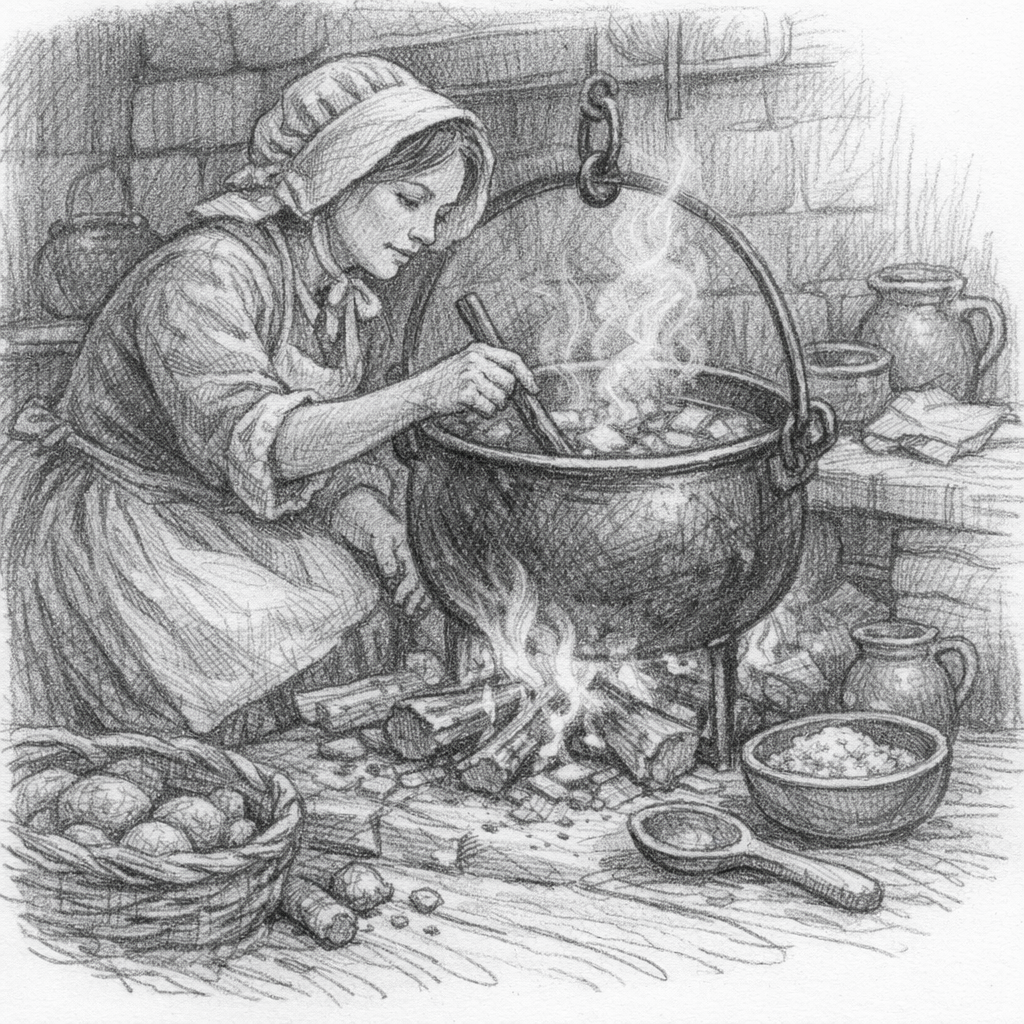
Perpetual soup was the frontier version of a slow cooker. A pot hung over the fire all day, sometimes for weeks, with bones, vegetables, herbs, and scraps added as they became available. The broth grew richer over time, providing nourishment to families who needed every calorie they could get. Reviving perpetual soup today means embracing a zero‑waste approach to cooking—turning leftovers into something sustaining and delicious.
8. Corn Dodgers: The Original Trail Snack
Corn dodgers were small, dense cornmeal dumplings baked or fried until firm. They traveled well, resisted spoilage, and could be eaten on the go. Cowboys, soldiers, and pioneers all relied on them. Their slightly sweet, hearty flavor makes them a wonderful alternative to modern bread rolls. They pair beautifully with chili, stew, or a drizzle of honey.
9. Pocket Yams: Nature’s Portable Comfort Food
One of the simplest and most satisfying pioneer recipes, pocket yams were baked directly in campfire coals until soft and caramelized. Wrapped in cloth, they stayed warm for hours and could be eaten while traveling. Their natural sweetness and creamy texture made them a favorite among children and adults alike. Bringing back pocket yams is as easy as tossing a sweet potato into the oven—or better yet, into a backyard fire pit.
10. Switchel: The Forgotten Pioneer Energy Drink
Long before sports drinks existed, pioneers quenched their thirst with switchel—a mixture of water, vinegar, ginger, and molasses. It was refreshing, hydrating, and packed with electrolytes. Farmers drank it during haying season to stay cool and energized. Its tangy, slightly sweet flavor is surprisingly addictive, and it deserves a place in modern kitchens as a natural alternative to processed beverages.
Why These Recipes Matter Today
Reviving forgotten pioneer recipes is more than a culinary exercise; it is a way of reconnecting with the resilience and creativity of those who came before us. These dishes were born from hardship, yet they carry a warmth and simplicity that feels grounding in a fast‑paced world. They teach us to appreciate basic ingredients, to waste less, and to find comfort in foods that have sustained generations. Whether you’re baking salt‑rising bread, frying potato cakes, or sipping switchel on a hot day, you’re participating in a tradition that shaped families, communities, and the very landscape of early America.